

Blog
Marine Electric Generator vs Marine Diesel Generator: What’s the Difference?

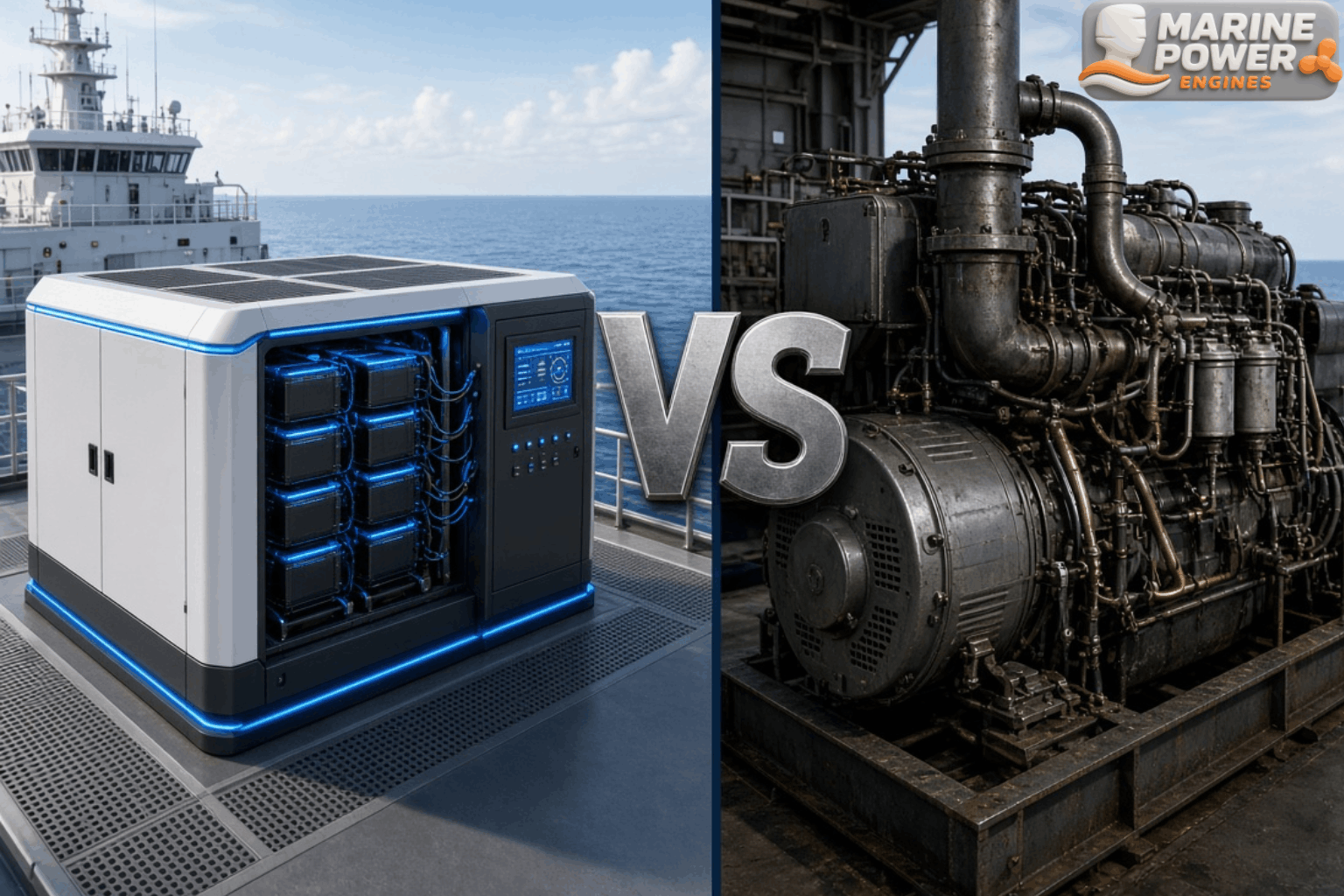
Reliable power at sea is a critical decision for the vessel operator. The correct generator system ensures uninterrupted operation of navigation equipment, lights, HVAC, pumps and hotel loads. The focus of the discussion is on two main technologies: the traditional marine diesel generator and the emerging marine electric generator. Being aware of the disparities can assist ship owners, fleet managers, and yacht operators in making informed decisions that impact fuel consumption, emissions, maintenance, and the general functioning of their operations.
Our product development, supply and service comprises marine power solutions designed for real-life scenarios at Marine Power Engines. This guide explains how these systems operate, what they are good for and what should influence your choice.
Introduction to Marine Diesel Generator.
Marine diesel generators are a type of generator that includes an alternator along with a diesel engine. This is done by the engine burning marine diesel or heavy fuel oil to generate mechanical energy that is converted to electrical energy by the alternator. Their high power density, proven reliability and ability to run for long periods under heavy load have been the backbone of marine power generation for decades.
They are well built, suitable for continuous or prime power duty, and are relatively easy to fuel in most ports, and can cope with high starting currents from pumps and compressors. Where alternative fuels or charging can’t be provided and high continuous output is needed, diesel generators are still used on larger yachts, workboats and most commercial vessels.
But there are trade-offs for diesel systems. They emit exhaust fumes, cause a lot of noise and vibration, need frequent oil and filter replacement, and rely on a consistent fuel supply. Adding to this complexity and cost are fuel quality and sulfur content regulations and emission control areas (ECAs).
Introduction to Marine Electric Generator.
Marine electric generators are systems used to generate or deliver electrical power that place more emphasis on electrical architecture, frequently combined with batteries, hybrid systems, shaft generators or more complex alternator designs. In today’s marine environment, this can refer to pure electric generation packages, hybrid diesel-electric packages, and high-efficiency, quiet electric generation packages with permanent-magnet and electrically optimized generators that have lower emissions.
The primary concerns of these systems are generally saving energy at various stages of their use, simplifying mechanical parts in some cases, and the intelligent storage and management of energy. A marine electric generator system can be powered from a variety of sources – shore power, batteries, renewable sources if available, and/or optimized engine-driven generation – and provide power via complex power management systems. This leads to reduced local emissions in some operating modes, reduced noise and optimized load management.
In applications with high environmental demands, such as ships with passenger capacity, research ships, and luxury yachts, and where the operators are interested in maximizing fuel use efficiency by hybrid solutions or peak shaving, the use of marine Electric Generators is one way to approach the challenge.
Core Differences at a Glance
Power Source and Conversion
Diesel generators use an internal combustion of liquid fuel to produce mechanical rotation in order to operate the alternator. Marine electric generators place a focus on electrical generation and distribution systems, frequently combining efficient electric generators with battery storage or hybrid controls, so that the engine operates only when it is most efficient or when it’s needed.
Emissions and Environmental Impact
CO₂, NOx, SOx and Particulate Matter are emitted by diesel generators. Exhaust after-treatment is often necessary to comply. By enabling local emissions to be reduced, particularly when operating at optimum engine speed and load or in sensitive zones by utilising stored energy, marine electric generator systems, and in particular hybrid or battery supported systems, can play a significant role in reducing local emissions. This benefit increases with the increasing regulation in ports and coastal areas.
Noise and Vibration
The diesel engine itself is noisy and vibrates through the hull. Generally, electric-oriented systems are quieter, especially if they are operating from batteries, or if the generator is tuned for lower speed and vibration. This makes for more comfortable crew and passenger experience.
Fuel efficiency and operating costs
A well loaded diesel generator is efficient, when part loaded it is fuel wasting. In marine electric generator architectures, load management, variable-speed or hybrid operating modes are often included to ensure that prime movers are operated within their most efficient range and fuel consumption is minimised. This can reduce operating costs over time; however, the upfront capital investment, battery or power electronics investment should be taken into account.
Maintenance Requirements
Regular engine service for diesel generators includes oil changes, filter changes, and checking the injectors, as well as cooling system maintenance. When hybrid strategies are used to reduce running hours, marine electric generator systems generally feature fewer mechanical wear points in the electrical path, and benefit from longer periods of engine overhaul. There’s also the consideration of power electronics and batteries, which have their maintenance issues as well, such as battery health monitoring.
Space, Weight, and Installation
For conventional diesel generators, a fuel tank, exhaust routing and sound attenuation are required, and they are compact for the power output. Electric and hybrid systems may require more space for batteries and inverters, but can in some instances cut down on the number or size of engines needed by using better power management.
Reliability and Redundancy
Diesel generators have proven their ability to be reliable power sources for long periods of duty. Redundancy is provided by installing several units. Marine electric generator systems are reliable thanks to battery buffering, seamless transfer between energy sources, and advanced monitoring. With proper design and maintenance, either can be designed for high availability.
Marine Diesel Generators offer a number of benefits.
- Power output suitable for large commercial vessels with high continuous output.
- The technology that is already grown and well spread out throughout networks.
- In many instances, relatively low initial investment for pure diesel installations
- Ventilation and fresh air.Ability to run without shore power or charge from batteries.
- Experience in long-endurance and/or remote operations
Marine electric generators provide several benefits.
- Reduce emissions and improve regulatory compliance potential
- Reduced noise and vibration for improved onboard environment
- Option for higher overall fuel economy (hybrid or optimized operation).
- More varied options for electricity handling and incorporation of alternative energy sources.
- Possibility to reduce hours of engine operating and related maintenance.
What System is Best for Your Boat?
Selection is dependent on vessel type, operating profile, regulatory environment, and commercial priorities.
High-rated diesel generators for commercial cargo or offshore vessels which are operated for extended periods at sea with high continuous loads are still attractive options, often combined with selective catalytic reduction or other pollution control technology. For passenger vessels, ferries, research ships and luxury yachts, marine electric generator or hybrid machinery systems that are low-emission, quiet, and comfortable for passengers are often a key priority.
Consider these practical factors:
- Daily and peak electrical loads
- Time spent in emission control areas or ports with strict air quality rules
- Availability of shore power and planned battery charging infrastructure
- Crew skill level and preferred maintenance approach
- Total cost of ownership over the vessel’s service life, including fuel, maintenance, and potential carbon or emission fees
- Classification society requirements and future-proofing for upcoming regulations
Hybrid configurations frequently offer a practical middle path. A marine diesel generator can supply baseline or peak power while batteries and electric systems handle transient loads, zero-emission modes, or silent operation. Many operators find this combination delivers the reliability of diesel with meaningful environmental and operational gains.
Why Buy from Marine Power Engines
Choosing between a marine electric generator and a marine diesel generator is not simply a technology preference, it is an operational and commercial decision. At Marine Power Engines we evaluate each project on its specific duty cycle, regulatory exposure, and performance goals. We supply and support both traditional diesel generator sets and advanced electric and hybrid solutions, ensuring the system matches the vessel rather than forcing the vessel to adapt to a generic product.
Our team focuses on real-world reliability, proper sizing, quality installation support, and ongoing service. Whether you need a high-output diesel package for continuous duty or a quieter, lower-emission marine electric generator configuration for sensitive operations, we help you select and implement the right solution.
Conclusion
Marine diesel generators remain a proven, powerful choice for many applications, delivering high energy density and independence from shore infrastructure. Marine electric generators and hybrid systems offer clear advantages in emissions, noise, and potential long-term efficiency, especially as regulations and operational expectations evolve.
The difference ultimately comes down to how and where the vessel operates. By matching technology to duty cycle, operators can achieve reliable power, controlled costs, and compliance with current and future standards. If you are evaluating a new installation, a retrofit, or a hybrid upgrade, the team at Marine Power Engines is ready to help you compare options with clear technical and commercial analysis.
Contact Marine Power Engines to discuss your vessel’s power requirements and explore the most effective marine generator solution for your fleet.

