

Blog
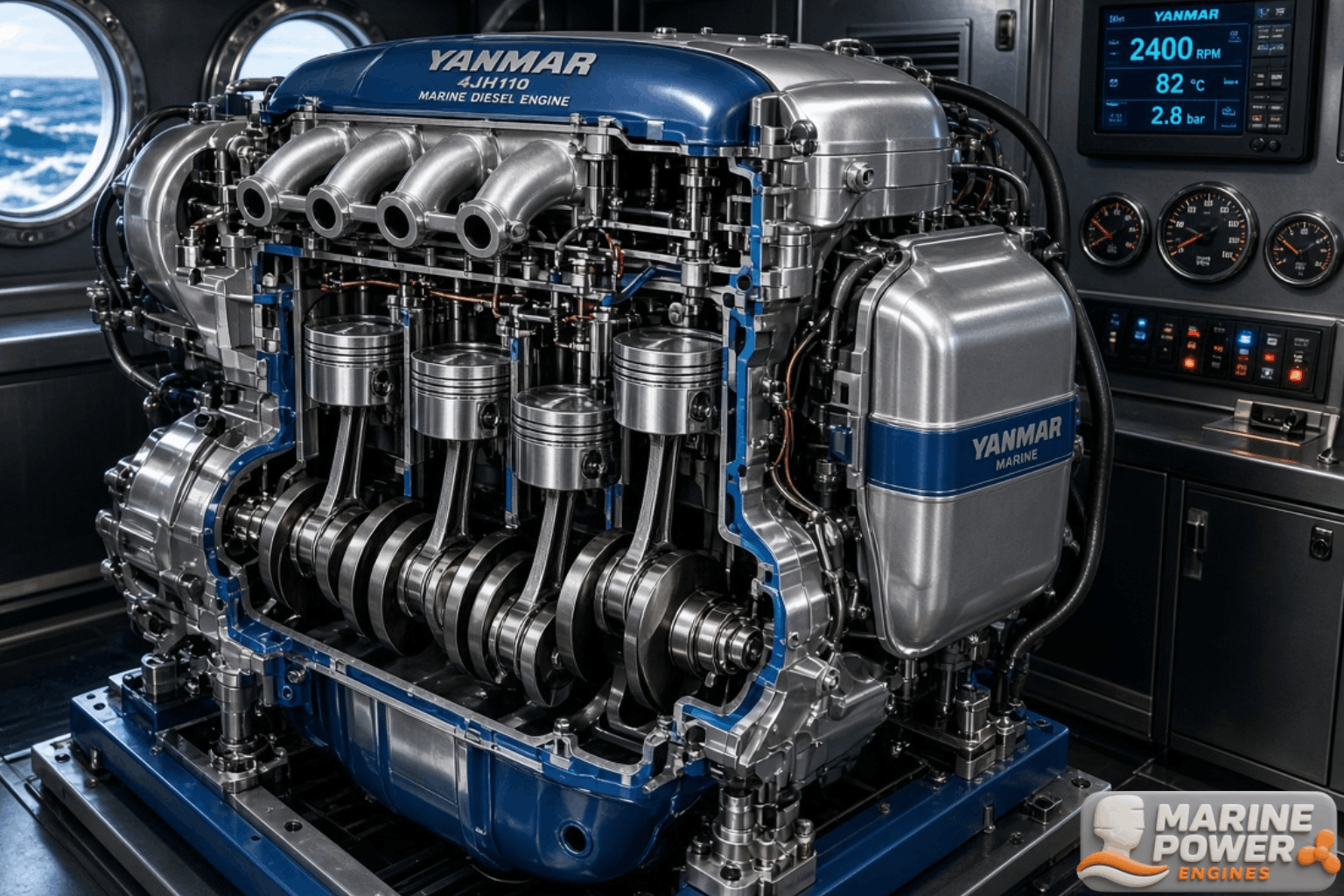
4 Cylinder Yanmar Diesel Engine: A Guide to Performance, Reliability, and Marine Applications

Reliability in marine propulsion is not a luxury, but a necessity. Marine engines have to provide reliable power in difficult conditions, often for long periods, in an environment where salt water, humidity, varying loads, vibration and limited access to service facilities can all compound the difficulties.
For decades, Yanmar diesel engines have been known for their compact design, efficient performance and reliable operation among boat owners, commercial operators, shipyards and marine professionals. Among the engine options available, four-cylinder Yanmar diesel engines are a particularly practical mix of power, smoothness, fuel economy and ease of installation.
At Marine Power Engines, we understand that selecting the right marine engine is about more than matching horsepower numbers. The engine must be compatible with the vessel, the propulsion system, the operating profile, the available space and long-term maintenance requirements. This guide looks at why a 4 cylinder Yanmar diesel is a popular choice for marine applications and what you should look for before you buy or install one.
What Is a 4-Cylinder Yanmar Diesel Engine?
A 4 cylinder Yanmar diesel engine uses four cylinders arranged in an inline configuration to convert the energy produced by diesel combustion into mechanical power. This power is then transferred through the marine transmission and ultimately to the propeller or other propulsion system.
Compared with smaller two- or three-cylinder engines, four-cylinder configurations generally provide greater displacement and power potential while maintaining the compact footprint that makes Yanmar engines attractive for marine installations.
The exact specifications vary considerably between Yanmar engine models. Depending on the model and application, a four-cylinder engine may be designed for sailboats, displacement vessels, workboats, commercial craft, auxiliary propulsion, or other marine uses.
What makes the configuration particularly useful is its balance. Four cylinders can provide enough power for a wide range of vessels without necessarily requiring the physical size, weight, and fuel requirements associated with larger six-cylinder engines.
Why Choose a 4-Cylinder Diesel Engine for Marine Propulsion?
In marine propulsion the engine is subject to special demands. Marine engines generally operate at relatively constant loads over long periods of time, as opposed to automotive engines. Load and operating condition variations are less frequent.
In this environment, a good four-cylinder diesel engine can do well, because it has a number of important advantages:
1. Reliable power supply:
Diesel engines have a reputation for high torque at low rpm, and this is very useful in marine propulsion. Boats don’t need to accelerate quickly, they need to push hard and the diesel torque curve is perfect for turning a propeller efficiently.
A properly sized four-cylinder Yanmar engine will deliver dependable power and steady performance under load.
2. Installation:
Engine rooms are often very cramped places. A marine engine must fit in the available compartment but also allow room for servicing, ventilation, exhaust routing, cooling systems and other components.
Four-cylinder engines offer a good power-to-size ratio, which makes them attractive for repowering projects and new installations where space is at a premium.
3. Simple operation:
An inline four cylinder engine will have combustion events more often than a smaller two or three cylinder engine. This can help provide a smoother power delivery and less vibration when properly mounted and aligned.
Smooth operation is more than just passengers’ comfort. Over time, excessive vibration can wear down mounts, couplings, exhaust parts, hoses and other equipment.
4. Mileage:
Diesel engines are inherently efficient, especially when used in the load range for which they were designed. A Yanmar engine, when properly matched, will deliver economical fuel consumption with the continuous power required for marine operation.
But don’t write off fuel economy based on the engine alone. Actual fuel consumption depends on propeller choice, vessel displacement, hull design, cruising speed, transmission ratio, engine condition and operating practices.
Performance Specs of 4 Cylinder Yanmar Marine Engines
When you are judging a marine diesel engine, horsepower is only part of the equation. At Marine Power Engines we suggest looking at the whole propulsion system.
Torque & Propeller Performance
Torque is needed to keep a propeller turning, especially when a boat is accelerating, climbing waves, or fighting currents and wind.
A diesel engine’s torque characteristics therefore play a major role in real-world marine performance. The goal is not simply to select the engine with the highest horsepower rating. Rather, the engine should be operated at speeds and loads within the manufacturers recommendations and driving a suitably matched propeller.
Continuous Duty Running
Marine engines can run for long periods of time. This highlights the significance of continuous-duty capability and proper engine sizing.
An engine that is always overloaded will run hotter, use more fuel, build up carbon and wear out faster. In contrast, an oversized engine that is not often loaded to an appropriate operating load can also run inefficiently.
The perfect tuning lets the engine run comfortably in its desired operating range.
Cold Weather Starting & Performance
Diesel engines are compression ignition . Starting performance can be affected by temperature , battery condition , fuel quality , glow-plug or preheating systems where applicable , and overall engine condition .
A healthy marine diesel with a properly maintained starting and fuel system should provide dependable starting performance under normal operating conditions.
Reliability: One of the Biggest Advantages
Marine engine reliability is critical because mechanical failure on the water can become a serious operational problem.
Yanmar is long known in the marine industry and their diesel engines are well known for their practical engineering and durability. Still, even a well-constructed engine needs good upkeep.
Reliability comes from the combination of:
- Correct engine installation
- Proper alignment
- Clean and appropriate fuel
- Effective cooling
- Regular oil and filter changes
- Correct exhaust installation
- Proper propeller matching
- Routine inspection
- Timely replacement of wear components
- Operation within recommended limits
In other words, a reliable engine is not simply the result of the manufacturer’s nameplate. Installation and maintenance have a major influence on how long the engine will perform.
Cooling Systems in Marine Diesel Engines
Cooling is particularly important in marine applications. Engines generate significant heat, and that heat must be controlled continuously.
Many marine diesel installations use a combination of closed-loop engine cooling and raw-water heat exchange. The precise arrangement depends on the engine model and installation.
Raw seawater or freshwater drawn from the surrounding environment may be used to transfer heat through a heat exchanger before being discharged through the exhaust system.
This means the cooling system deserves regular attention.
Owners should check for such components as: raw water pumps, Pump Impellers Hoses & Clips Heat exchangers Heating controls, thermostats Coolant levels Condition of coolant Sea strainers Water-injection parts and exhaust elbows Cooling and exhaust components can be especially hard on salt water environments and inspection is an important part of preventative maintenance.
Fuel System and Diesel Quality
The fuel system is another critical area for marine diesel reliability.
Water contamination, microbial growth, sediment, and poor fuel storage can create problems ranging from difficult starting to injector and fuel-pump damage.
For that reason, fuel should be stored properly and monitored for contamination. Fuel filters and water separators should be inspected and replaced according to the manufacturer’s maintenance requirements and the vessel’s operating conditions.
If a vessel spends extended periods out of service, fuel-management practices become even more important.
Maintenance Requirements
One of the reasons four-cylinder Yanmar diesel engines are popular is their practical serviceability. However, routine maintenance remains essential.
A typical preventative maintenance program may include:
Engine Oil and Filter
Engine oil lubricates internal components and helps control heat and contaminants. Oil should be changed at the intervals specified for the particular engine model and operating conditions.
Using the correct oil specification is important. Marine engines may operate under sustained load, so lubrication requirements should not be treated the same way as those of an occasional-use engine.
Fuel Filters
Fuel filters protect the injection system from contaminants. Restricted filters can cause poor performance, difficult starting, or reduced power.
Air Intake
The engine needs an adequate supply of clean air. Restricted intake can reduce combustion efficiency and affect performance.
Cooling System
Coolant levels, raw-water flow, impellers, strainers, and heat exchangers should be inspected regularly.
Belts and Hoses
Belts, hoses, clamps, and related components should be checked for cracking, deterioration, looseness, or corrosion.
Exhaust System
The marine exhaust system deserves particular attention because it combines high-temperature exhaust gases with water in many installations. Leaks, corrosion, or deterioration can create serious problems if ignored.
Always follow the maintenance schedule and technical specifications for the particular Yanmar engine model and not a generic service interval.
4 Cylinder Yanmar Engines for Marine Applications
The four-cylinder diesels are very versatile and can be used in many different marine applications.
Sailboats and Auxiliary Propulsion:
Four-cylinder Yanmar engines are commonly associated with sailboat propulsion where dependable auxiliary power is required for harbor maneuvering, periods of calm weather, docking, and longer passages.
The compact design can be especially valuable in sailboats where engine-room space is limited.
Boats:
Cruise Big factors for cruising boats are reliability and fuel economy. A well-matched four-cylinder diesel can deliver reliable power while maintaining reasonable fuel consumption.
Workboat:
Workboats often run in tough conditions, and often have long hours of steady engine loads. For this kind of work a well set up marine diesel will give you the torque and longevity you need.
Commercial & Utility Boats:
The uptime is very important to commercial operators. Downtime can have a direct impact on operating costs, so preventative maintenance and reliable engine performance are particularly important.
The right Yanmar four cylinder model will depend on the vessel’s displacement, operating speed, duty cycle, propulsion arrangement and regulatory requirements.
Renovation Projects:
Repowering is another important application. As marine engines age, it can be difficult to support them economically due to age, parts availability, efficiency or increasing maintenance requirements.
A four-cylinder Yanmar engine can be an attractive option, if the vessel’s dimensions, horsepower, transmission, shaft alignment, exhaust requirements and cooling arrangement match.
However, repowering should be treated as an engineering project, not just an engine change. Some of the areas that might need to be looked at are propeller sizing, shafting, mounts, controls, electrical systems, ventilation and exhaust components.
How to Select the Right 4-Cylinder Yanmar Engine
Choosing the right engine starts with the vessel—not simply the desired horsepower.
At Marine Power Engines, we recommend considering the following factors.
Vessel Displacement
A heavier vessel generally requires more propulsion power than a lighter vessel of similar length.
Hull Design
Displacement, semi-displacement, and planing hulls have different propulsion requirements. Hull efficiency can have a major impact on engine selection.
Desired Cruising Speed
The engine should be selected around the vessel’s realistic cruising requirements rather than maximum theoretical speed.
Propeller and Gear Ratio
The transmission and propeller must work with the engine as a complete system. An incorrect gear ratio or propeller can prevent the engine from reaching the correct operating range.
Physical Dimensions
Measure free space in the engine including height, width, length, access for maintenance, clearance around service points.
Cooling and Exhaust Requirements
The installation shall provide for adequate cooling-water supply, exhaust routing, ventilation and related systems.
Electrical Requirements
Starting systems, alternators, batteries, instrumentation, controls, and wiring should all be compatible with the chosen engine and vessel.
Common Signs of a Marine Diesel Problem
Recognizing problems early can prevent expensive repairs.
Some signs to look for are Hard starting varies by engine. May be caused by battery problems, fuel restrictions, air in the fuel system glow-plug or preheating problems, or compression-related problems.
Excessive smoke: Smoke color and operating conditions provide clues to combustion, fuel delivery, lubrication or engine loading.
Loss of power: Could be due to a restriction of fuel, air intake problems, exhaust restriction, propeller loading or other mechanical problems.
Overheating: Due to limited raw-water flow, impeller damage, cooling-system problems or other reasons.
Unusual vibration: This can be caused by engine mounts, shaft alignment, propeller damage, drivetrain problems or engine related problems.
Oil consumption or leaks: This needs to be checked out and not ignored, particularly if it’s getting worse.
Symptoms that persist should be diagnosed by a qualified marine technician before continued operation causes additional damage.
New Engine vs. Replacement or Remanufactured Engine
When replacing a marine diesel, owners may have several options.
You get the benefit of current specs and a new powerplant with a new engine. But sometimes a properly remanufactured or professionally rebuilt engine can be a cost-effective alternative.
The right choice depends on the value of the vessel, its intended operating life, budget, availability of replacement components, installation requirements and the expected annual operating hours.
Marine Power Engines believes that the decision should not be based on the price but on the total cost of ownership.
You should also factor in the cost of installation , any accessories , transmission compatibility , controls , exhaust modifications , labor , maintenance and future parts support .
Why Proper Installation Matters
Even an excellent marine engine can underperform if installed incorrectly.
Engine alignment is particularly important. If the engine, transmission, shaft and propeller system are not in alignment, vibration, coupling wear, bearing problems and early drivetrain damage can occur.
Ventilation is equally important. The engine compartment needs enough air for combustion and cooling, but also needs to control heat.
The exhaust system must be correctly designed for the engine and vessel, including appropriate water injection, routing, support, and protection against water entering the engine.
Professional installation can therefore be one of the most important investments made during a repower.
Final Thoughts:
When properly matched to the specifications of the vessel, a 4-cylinder Yanmar diesel engine can be a excellent solution for marine propulsion.
Its combination of dependable diesel performance, useful torque, compact packaging, smooth operation, and practical serviceability makes the four-cylinder configuration suitable for many recreational, cruising, commercial, and utility vessels.
But choosing an engine should never be based on horsepower alone. The vessel’s displacement, hull design, cruising speed, propeller choice, transmission ratio, installation dimensions, cooling, exhaust, electrical systems, and intended duty cycle all matter.
Marine Power Engines has a simple philosophy: the right marine engine is one that delivers reliable performance for your particular boat and operating requirements.
Whether you are replacing an old diesel, looking at a complete repower or considering a Yanmar four-cylinder engine for a new marine application, the careful choice of engine and professional installation can mean a lot for performance, efficiency and long-term dependability.
Need help selecting the proper marine diesel engine? Talk to Marine Power Engines about your vessel, current setup and propulsion needs. Our mission is to help you find a reliable engine solution based on how you actually use your boat.

