

Blog
Inboard vs Outboard Engines: Pros, Cons, and Performance

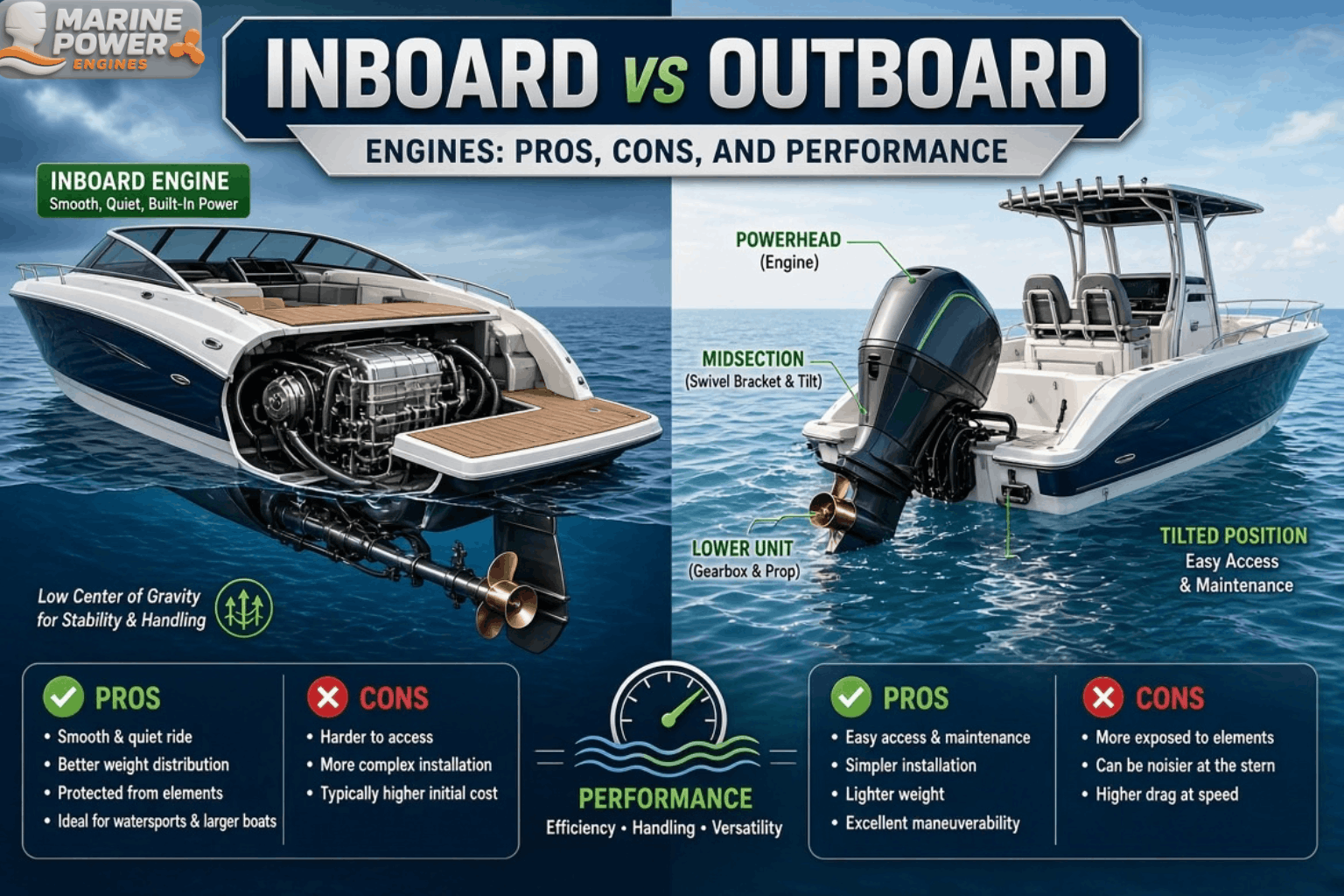
Choosing the right power system is one of the most important decisions a boat owner will make. The debate around Inboard vs Outboard Engines comes up constantly among boaters looking for the best combination of performance, reliability, efficiency, and practicality. At Marine Power Engines, we help customers navigate this exact choice every day. Whether you’re outfitting a new boat, repowering an existing one, or simply trying to understand which setup better matches how you use the water, knowing the real differences between inboard and outboard engines is essential.
Both systems have evolved significantly. Modern four-strokes are mind-blowingly powerful and efficient, and modern inboards (diesel and advanced gasoline) are still great in torque, durability, and specific applications like watersports and long range cruising. There is no single “winner.” The right choice depends on what type of boat you have, what waters you typically use it on, how you plan to use it, maintenance preferences and long-term ownership goals. Here’s a clear, practical breakdown of Inboard vs Outboard Engines.
What Is an Inboard Engine?
An inboard engine is mounted inside the hull, usually low and relatively central (or slightly aft in V-drive configurations). Power is transferred through a shaft and propeller that sit under the boat, or via a sterndrive (inboard/outboard) system that combines an internal engine with an external drive unit. Inboards are common on larger cruisers, motor yachts, wake boats, and some commercial vessels. They can run on gasoline or diesel, with diesel versions prized for torque and fuel efficiency on heavier boats.
Outboard Motor Definition
An outboard engine is a self-contained unit that is mounted on the transom. The engine, drive, and propeller form one package that sits outside the hull. Outboards range from small portable kickers to high-horsepower models exceeding 400–600 hp, and multiple units are routinely fitted on larger center consoles and performance boats. Nearly all modern recreational outboards are four-stroke gasoline engines, though electric options are growing. Because the entire unit is external, it can be tilted or trimmed for shallow water, trailering, and maintenance access.
Advantages and Disadvantages of Inboard Motors
Benefits of Inboard Motors
- A heavier engine, mounted lower and more centrally, brings down the center of gravity. Improved weight distribution and stability.This usually results in a smoother, more stable ride, especially in chop or when drifting.
- high load carrying capacity and pulling powerInboards, especially diesels, have good low-end torque for pulling skiers or wakeboarders, pushing heavy-displacement hulls and maintaining a steady speed on long passages.
- Quieter Cabin Experience: The engine is integrated into the hull, providing more insulation. This means less noise and vibration for the passengers as usual.
- Cleaner transom and full swim platforms: Engine hanging off the stern? Nope. Designers get uninterrupted swim platforms and more flexible aft layouts. Much appreciated on family and watersports boats.
- Potential for long service life: Many inboards (especially diesels) can be built to high hour counts with proper care.Hull protects running gear underneath hull.
- Aesthetics and traditional feel: The clean lines and purposeful sound of an inboard-powered vessel are appealing to many boaters.
Disadvantages of Inboard Motors
- Access generally requires working in tight spaces beneath decks or sole panels. Shafts, packing glands and cooling systems need regular attention. Haul-outs and labor could be high for major repairs or repowering.”
- Running gear limits your capabilities in shallow water and makes running in skinny water or beaching more dangerous.
- The engine compartment or engine box uses up valuable space that could otherwise be used for seating, storage or living space.
- Higher initial cost and installation complexity in many cases.
- Less flexible trim and shallow-water operation: You cannot simply tilt the drive clear of the water.
Outboard Advantages and Disadvantages
Benefits of Outboard Motors
- Easy access and serviceability: Nearly all routine maintenance is done by simply tilting the engine or from the cockpit.Changing a worn or damaged outboard is so much easier and faster than pulling an inboard.
- Interior space: Powerplant outside the hull allows for open cockpit and more storage options, especially on fishing and day boats.
- Shallow Water Capability & Trailering Convenience Tilt the engine for a dramatic reduction in draft. Winterization is also easier with self-draining designs.
- Good power-to-weight ratio and performance: Modern outboard motors are quite light for their power.Often, a given horsepower rating translates into quicker acceleration and higher top speeds because of the weight being in the stern and more of the rated power getting to the propeller.
- Redundancy in Multi-Engine Installations Dual, triple and quad installations offer backup power and substantial total horsepower.
- Generally lower maintenance costs and less complex ownership for many recreational users, especially in saltwater where the unit can be tilted to reduce corrosion exposure.
Disadvantages of Outboard Engines
- Weight distributed aft: If it isn’t incorporated correctly into the hull, this can affect trim and ride characteristics.
- Visible and potentially noisier at the transom: Although modern four-strokes are much quieter than older two-strokes, the engine is not insulated inside the boat.
- Transom real estate and swim platform limitations: Large outboards occupy space that might otherwise be a full-width platform (though many builders now create effective side or forward platforms).
- Typically gasoline-only in the recreational range (diesels exist but are less common).
- Shorter service intervals in some comparisons, though overall ownership costs are often competitive.
Inboard vs Outboard Engine Performance Comparison
Looking at pure performance indicators, there are a few trends that stand out when comparing Inboard Vs Outboard Engines:
- Acceleration and top speed: Outboards generally win on hole-shot and top-end speed for the same rated horsepower.Because they weigh less and deliver power more efficiently (rated at the prop in many comparisons, not the crank), they have an edge on planing hulls and lighter boats.
- Torque and heavy-load capability: Diesels and inboard engines in general tend to have more low-rpm torque. This is good for watersports towing, displacement hulls and sustained heavy loads.
- Fuel efficiency: Results will vary with hull, load and speed of operation. Modern four stroke outboard engines are very efficient at cruising speeds . Diesel inboards are often better for long range, lower speed runs. Real-world testing of similar boats sometimes shows modest advantages one way or the other depending on the exact setup.
- Handling and maneuverability: Outboards (and sterndrives) offer directional thrust, which improves low-speed control and responsiveness. Traditional shaft-drive inboards rely more on the rudder and can feel less agile until the operator gains experience; twin-screw or pod systems change that equation significantly. Weight distribution with inboards often improves high-speed tracking and rough-water manners.
- Ride quality: The lower center of gravity of inboards can produce a more planted, less lively motion. Outboards often raise the hull higher and can feel livelier.
- Reliability & Longevity: Both systems are very reliable if properly maintained. Outboards win on ease of inspection and rapid replacement. Well maintained inboards, especially diesels, can rack up some serious hours.
Engine type is not the only factor in offshore capability; hull design and overall boat construction matter more, but the practical differences are significant: outboards give you redundancy and easier service far from home, inboards can give you superb range and comfort on long passages.
Which Should You Choose?
Choose an outboard if you want:
- Easy Maintenance & Fast Engine Swapping
- Maximum cockpit and storage
- Easy access to shallow water and trailering convenience
- High acceleration and higher top speeds on fishing or day boats.
- Multi engine redundancy
Choose an inboard if you want:
- Maximum torque for watersports and heavy loads
- A quieter, more stable ride with a lower center of gravity
- Full swim platforms and neat transom esthetics
- Longhaul diesel efficiency on large/displacement vessels
- Traditional yacht or wake boat features
Many modern boats straddle the line. High-horsepower outboards now power boats that once required inboards, while advanced inboard and sterndrive packages continue to dominate specialized niches.
Why Work with Marine Power Engines?
At Marine Power Engines we stock and support both inboard and outboard solutions from trusted manufacturers. Our team understands real-world performance differences, installation requirements, and long-term ownership costs. Whether you need a high-torque inboard for a wake boat, a reliable multi-outboard package for an offshore center console, a repower project, or expert guidance on matching horsepower and configuration to your hull, we provide straightforward advice and quality equipment built for the marine environment.
We’re all about reliable, efficient power that performs on the water – precisely what boaters want when they invest in a Marine Power Engines solution. From initial selection through ongoing support, our goal is to help you get the right engine for the way you actually boat.
Final Thoughts on Inboard vs Outboard Engines
The Inboard vs Outboard Engines decision is rarely about one system being universally superior. It is about matching the strengths of each to your boat, your waters, and your priorities. Outboards are the workhorse for versatility, serviceability and performance on a broad range of recreational boats.Inboards still shine when torque, weight distribution, quiet operation and certain layout needs are paramount.
If you’re evaluating options or planning a new installation or repower, reach out to the team at Marine Power Engines. We’ll help you weigh the pros, cons, and real performance characteristics so you can make a confident choice and spend more time enjoying the water with reliable power behind you.

